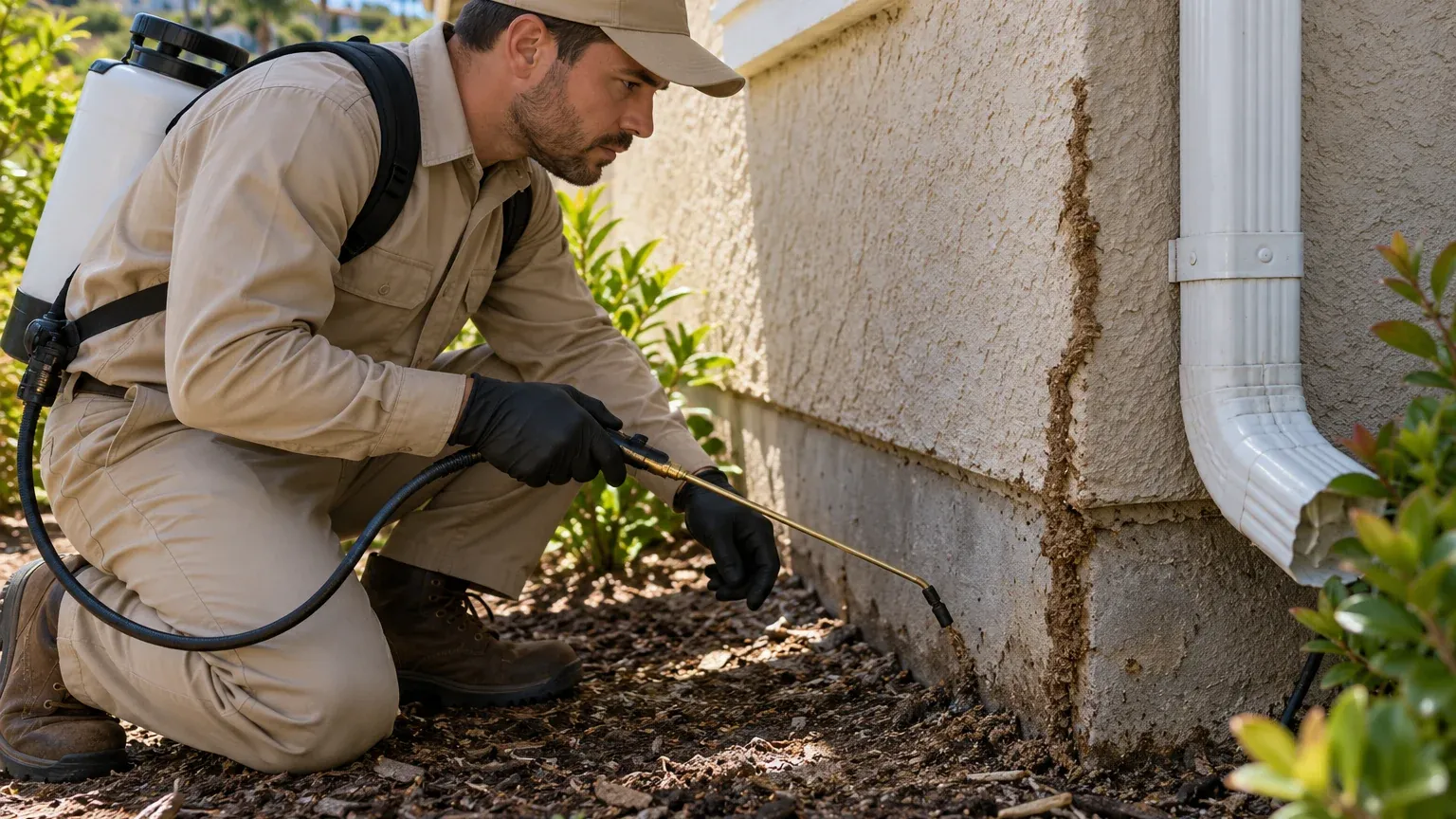
A food trail is not the nesting location
At a Kingsport home, ants can follow trim or a pipe opening toward food or water. The line that appears beside a sink does not establish where the colony lives. Tennessee Extension covers several house-invading ants, including odorous house ants, with different nesting habits. Suitable identification helps select a colony-focused approach rather than treating every small ant as the same problem.
Connected shelter can extend beyond the kitchen
A covered deck, wall void, or lower-level utility area may be relevant when the visible trail reaches an occupied room. Those connections should be assessed through evidence rather than assumed. Moisture near wood raises another question if wood-nesting ants are identified. Ants excavating nesting space need to be distinguished from termites consuming wood and from ants simply crossing a surface.
Support the control at the recurring route
Protected food, removal of accessible spills, correction of relevant leaks, and suitable gap repairs can help reduce returning activity. An appropriate bait or targeted method should fit the identified ants. For Kingsport kitchens, the useful result is evaluated along the actual trail and shelter conditions. Repeated general spraying at the counter may change the visible pattern without addressing the colony supporting it.